More than 95% of food production takes place on the soil surface. Soil is considered a non-renewable natural resource because it takes up to 20,000 years to regenerate 1 cm of soil [1]. This necessitates the implementation of strategies to reduce the degradation of agricultural soils. Soil quality assessment allows us to establish minimum required fertilization rates, ensure efficient water use and management, and avoid over-administration of agrochemicals for soilborne disease control.
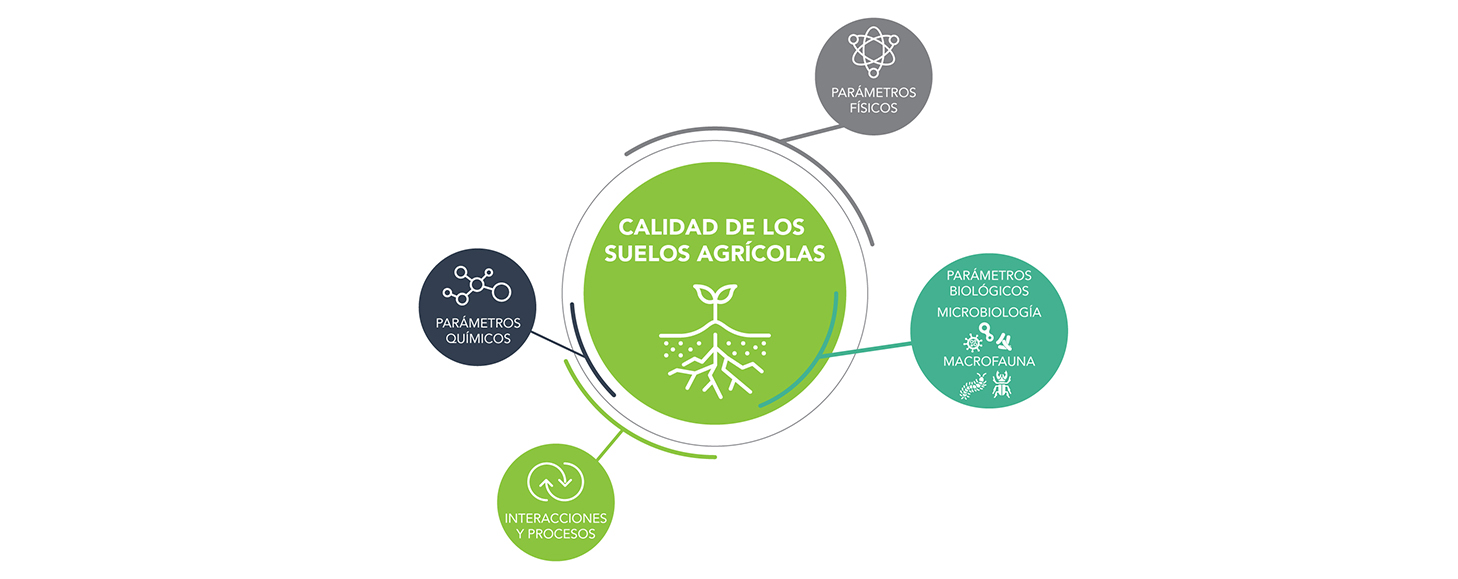
The quality of agricultural soils is defined by physical, chemical, and biological parameters and their interactions, which determine the level of crop productivity [2]. High-quality soils easily allow for higher production yields, while low-quality soils represent an increasing investment in inputs, amendments, or agronomic management practices to achieve desired production levels. See Figure 1.
Figure 1. Determination of the quality of agricultural soils.
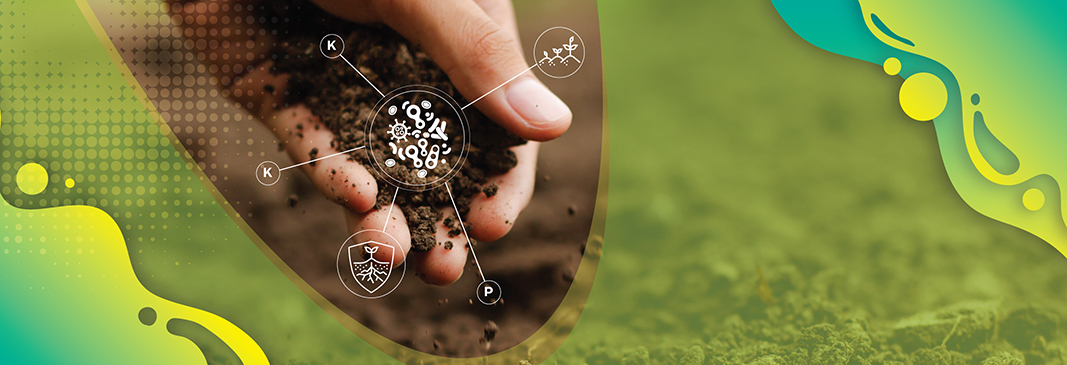
In this regard, we will first discuss the biological quality or health of soils, focusing on soil microbiology (Adjective: Relating to soil). Microorganisms have gone unnoticed due to their minute size; however, they have the capacity to produce positive or even negative changes in their environment. Microorganisms that benefit plants are known as "beneficial" microorganisms, while "phytopathogens" are unwanted microorganisms that cause disease and damage to plants, resulting in significant economic losses [3]. Therefore, it becomes imperative to establish the content of different microorganism species in the soil. This can be done through a soil laboratory analysis, which includes the identification and quantification of the different groups of beneficial and phytopathogenic microorganisms. See Figure 2.
Figure 2. Microbiological soil analysis process.

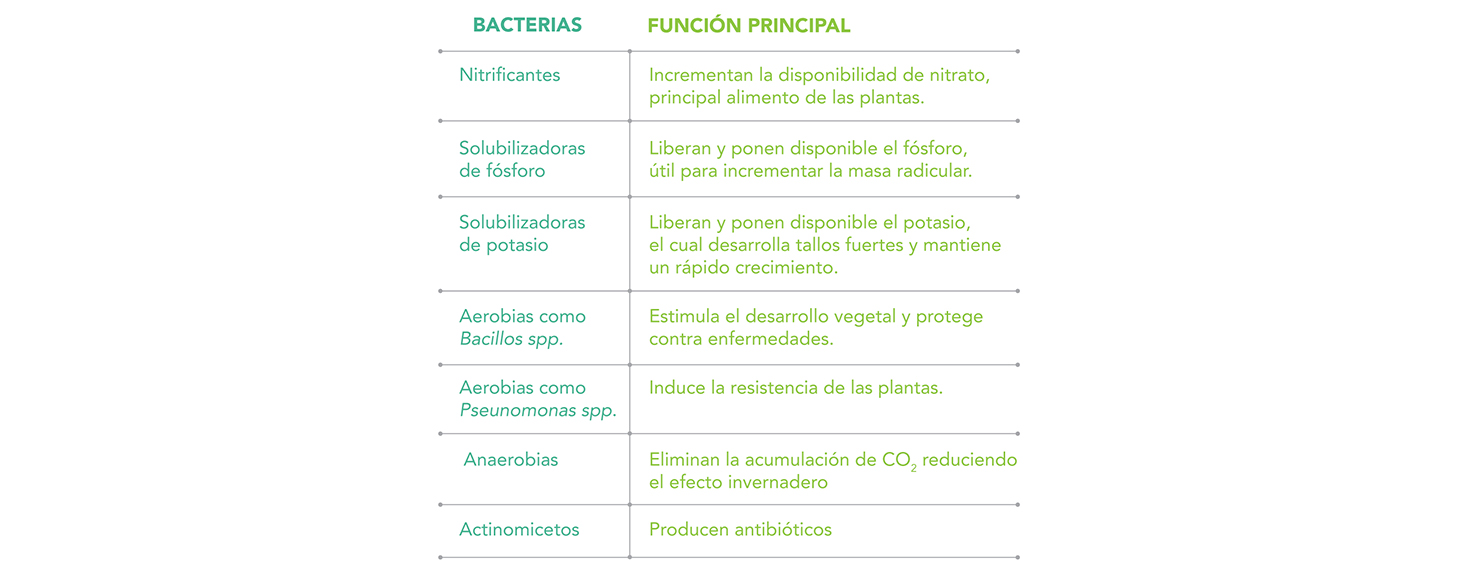
The most abundant microbial populations in soils are bacteria, which can be grouped according to the following table:
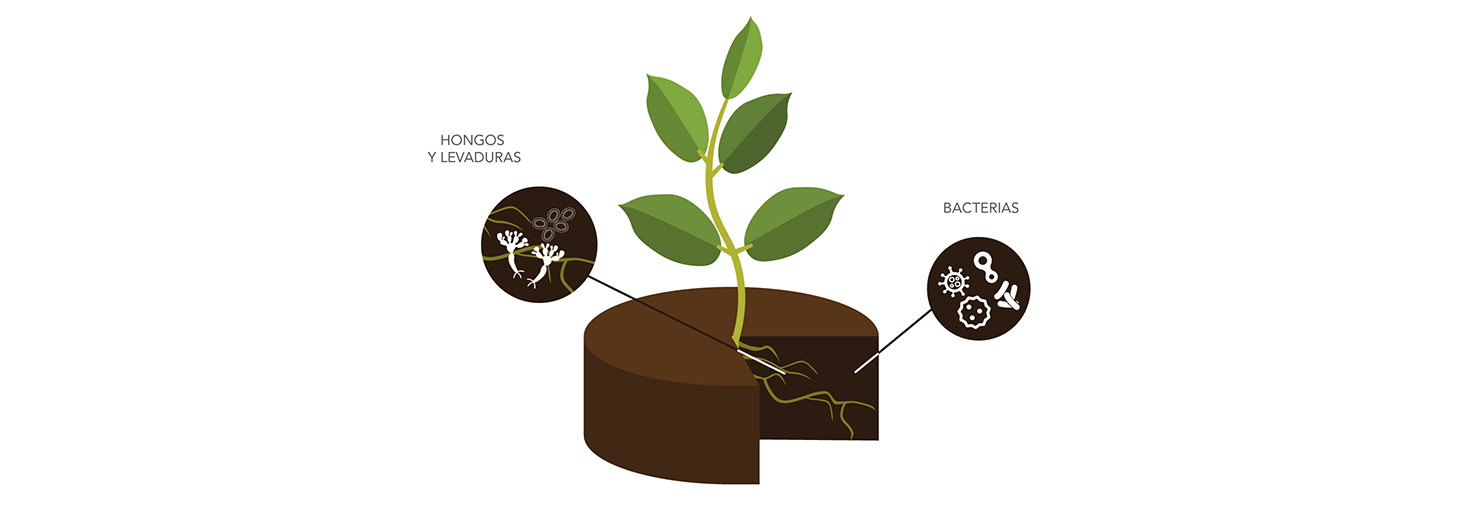
Fungi are also part of soil biodiversity; we are talking about microscopic fungi, with functions to unlock nutrients, and to combat soil diseases and pests.
Following fungi, yeasts can be found, which maintain a high rate of degradation of organic matter.
Image 1. Soil biodiversity.
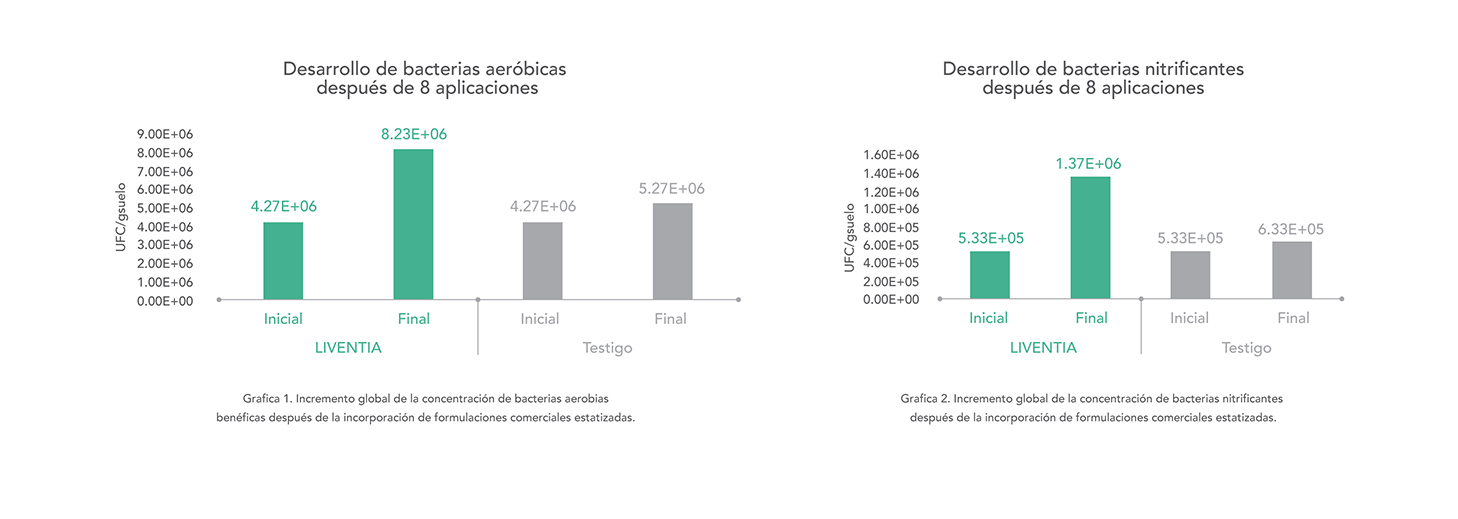
Chemical treatments for soil disinfection before planting, abundant irrigation, and the application of antibiotics during crop development decrease the content of beneficial microorganisms, limiting us from all the benefits these tiny organisms can provide. One strategy to reduce this loss is the incorporation of beneficial microorganisms into the soil; one of the most efficient methods is through standardized commercial formulations. Several studies we have conducted conclude that it is possible to improve the microbiological quality of soils by increasing the concentration of the main groups of microorganisms [4]. See Figures 1 and 2.
The application of beneficial microorganisms to agricultural soils is becoming increasingly important, forming part of what is known as "biological fertilization," and is a necessity in the fertilization plans of different crops. Without life in the soil, it is impossible to unlock the full potential of our plants.
References
1. Food and Agriculture Organization of the United Nations (FAO) 2015, web: http://www.fao.org/fileadmin/user_upload/soils-2015/docs/ES/ES_Print_IYS_food.pdf
2. Guide for Soil Quality and Health Assessment (USDA), 1999, web: https://www.nrcs.usda.gov/Internet/FSE_DOCUMENTS/stelprdb1044786.pdf
3. Agricultural Microbiology: Fungi, Bacteria, Micro and Macrofauna, Biological Control and Plant-Microorganism Interactions. Ronald Ferrera Cerrato and Alejandro Alarcón, Trillas Publishing House. 2007, ISBN 978-968-24-7810-9.
4. Trial Book LIVENTIA.