Long before regenerative agriculture became a movement, Christine and Erich Gemperle were quietly asking a different question.
Not, How can the land work for us?
But rather, How can we work with the land?
At Gemperle Orchards within California’s Central Valley, this second-generation farming team has been carrying this philosophy forward. Guided by a vision of “bring balance back to farming”, they have never been content to accept conventional practices simply because they were conventional. As early adopters of cover crops, champions of upcycling agricultural byproducts into compost, advocates for biology-based soil management, and collaborators with like-minded crop advisors and industry partners, the Gemperles continue to push the boundaries of modern agriculture. Their willingness to innovate while working in harmony with natural systems has positioned them as leaders in the movement toward regenerative and biologically driven farming.
Christine Gemperle proudly supports sustainable farming practices and fostering innovation within the conventional farming industry. Christine currently serves on the Almond Board of California's Board of Directors, where she participates in the Biomass, Environmental Stewardship and Nutritional Research committees. She also serves on the boards of Project Apis m. and the Bee & Butterfly Habitat Fund, connecting her work in almond production with broader efforts around pollinator health and agricultural stewardship. She has a BS in biology (UC Santa Cruz) and a MS in fisheries (Utah State University). That scientific background has remained part of the way she approaches farming, carefully metering “regenerative” approaches into conventional farming.
At Gemperle Orchards, which is split between Gustine and Ceres (affectionally named, “Home Ranch”), the sibling duo have been balancing conventional practices with a regenerative mindset.
Cover Cropping
Christine originally became interested in cover cropping through Project Apis m.'s Seeds for Bees program as a way to provide additional forage for honey bees. Over time, she began observing and learning about broader effects involving soil health, water infiltration, microbial communities and beneficial insects.
Whole Orchard Recycling, Composting, and Biochar
She has also explored whole-orchard recycling, returning chipped almond trees to the soil rather than removing or burning the woody biomass, along with compost, manure and biochar applications designed to build a more functional soil system. From its early years, the orchard has incorporated practices such as compost and biochar, while Christine has maintained the same philosophy seen elsewhere in her operation: use inputs thoughtfully, build the biological foundation of the orchard, and evaluate new tools based on how they fit into the larger system.
Taken together, these practices reflect an important part of Christine's philosophy: the orchard is more than the trees visible aboveground. Soil, roots, microorganisms, water, insects and the surrounding habitat are all parts of the same production system.
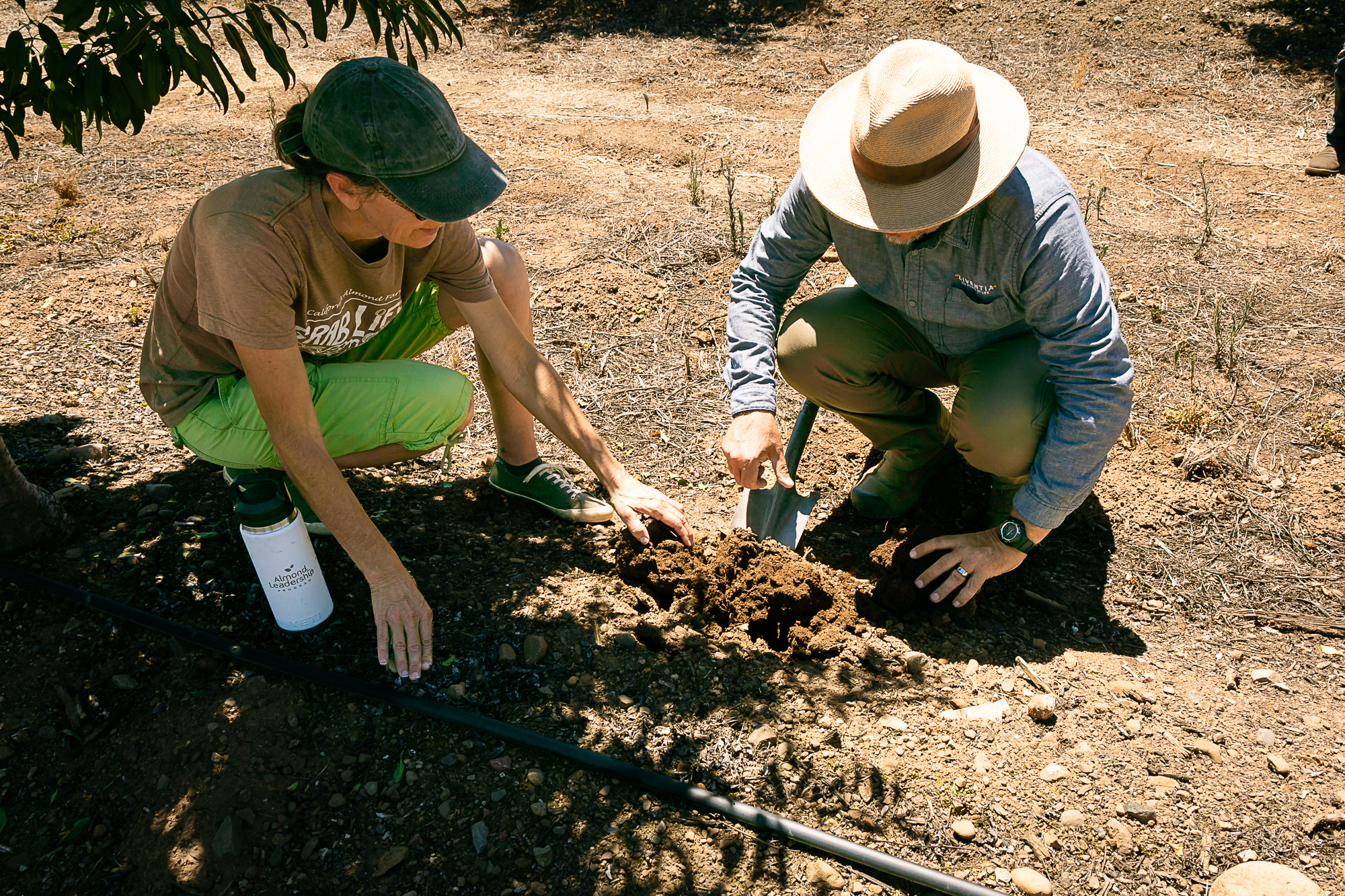
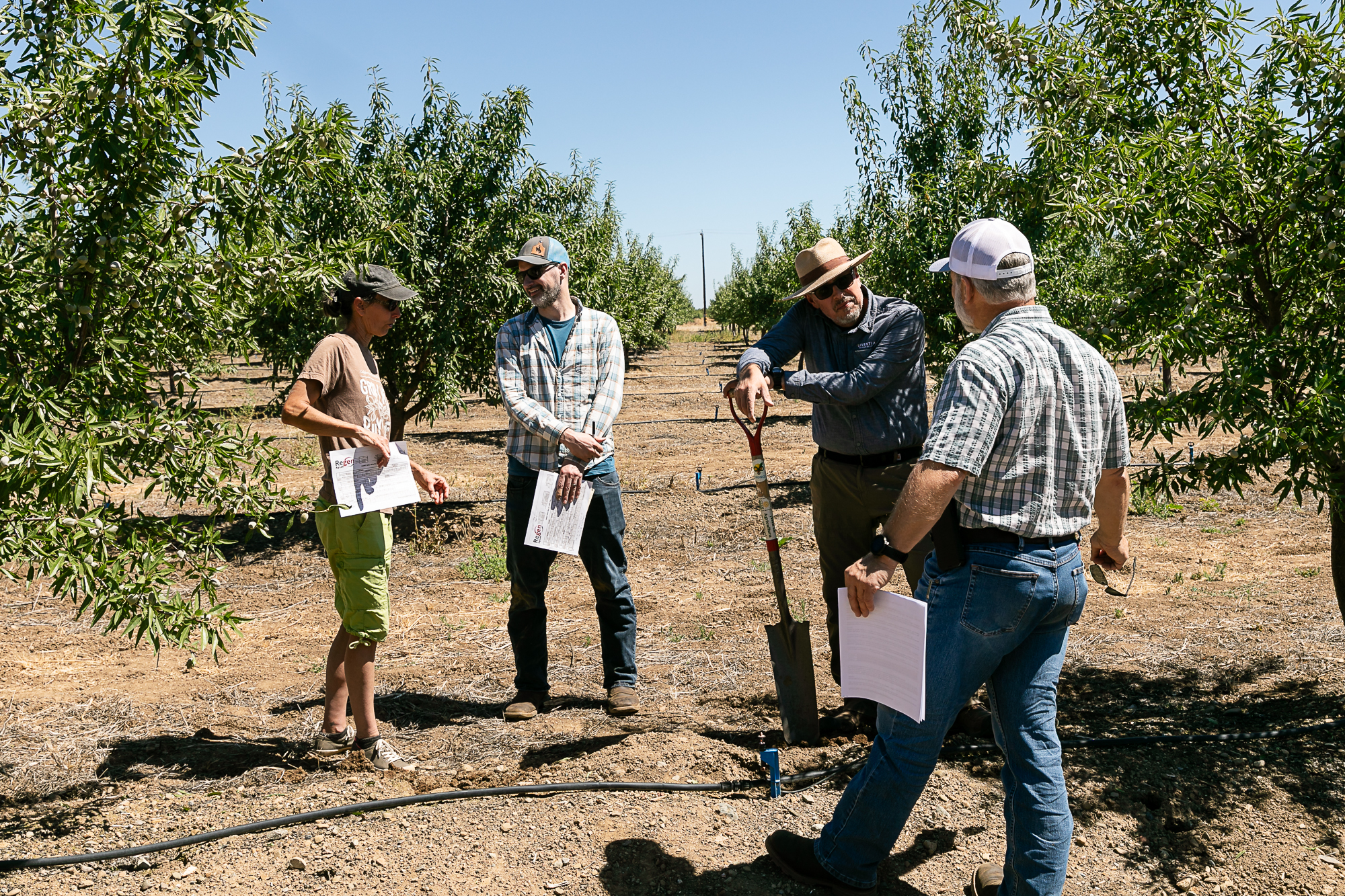
That mindset is especially relevant to a young 88-acre orchard in Gustine, California, where Liventia has been working alongside Christine since 2024. Planted in 2022, the orchard has incorporated biochar, composting, and cover cropping as regenerative practices built into a minimum input conventional fertilizer and IPM program.
For the past 2.5 years, Christine has been applying Liventia’s SSB during spring root-flush, followed by Soil Pro ahead of the Central Valley’s summer heat, and another SSB application during the fall root-flush (typically after harvest). SSB combines beneficial bacteria with four species of endomycorrhizal fungi and is designed to support root growth and water and nutrient absorption. Soil Pro is a bacterial biological formulated to support root development and plant performance under stressful growing conditions.
The intent is not to replace the agronomic foundation of the orchard, but to add another biological component to a system already emphasizing soil health, thoughtful input use and long-term orchard performance. This fall, we’re excited to see how these collaborative efforts will pay off as this will mark the young orchard’s first commercial almond harvest.
Until now, much of the story has been about establishing the orchard—building trees, roots and soil while preparing young almonds for the production years ahead. Harvest will provide a new opportunity to begin connecting those early-season management decisions with commercial orchard performance.
For Liventia, that's what makes working with growers like Christine particularly valuable. Biological agriculture isn't something that happens independently of the rest of the farm. It has to fit into real production systems, alongside irrigation, fertility, pest management, soil amendments, weather and the economic realities growers face every season.
Christine Gemperle has spent years asking how those pieces can work together better. We're excited to continue learning alongside her.
Stay tuned as the Gustine orchard reaches its first commercial harvest this fall—and as we begin sharing more from the field.