The soil is considered a living and dynamic system, on whose condition the sustenance of humanity can depend, where there are complex interactions between the roots of plants with the microorganisms that inhabit it, as well as all the abiotic constituents of the soil,¹ which feed back, providing stability and resilience to ecosystems. However, there is evidence of widespread degradation of agricultural soils in the forms of erosion, loss of organic matter, pollution, compaction, increased salinity among other damages.²
In the rhizosphere, it is where the roots of plants interact with the microbial community, and it concentrates a large fraction of the total biodiversity of the Earth, being probably the most dynamic habitat on the planet.³
Among the main groups of rhizosphere microorganisms are bacteria, actinomycetes, fungi and unicellular algae. The vast majority of rhizospheric bacteria exert positive effects, improving plant growth or soil fertility and structure. Bacteria with positive effects on the plant are called rhizobacteria, for example, plant growth promoters (PGPR), or those that solubilize or fix nutrients, or that exert protective effects against plant pathogens.⁴.
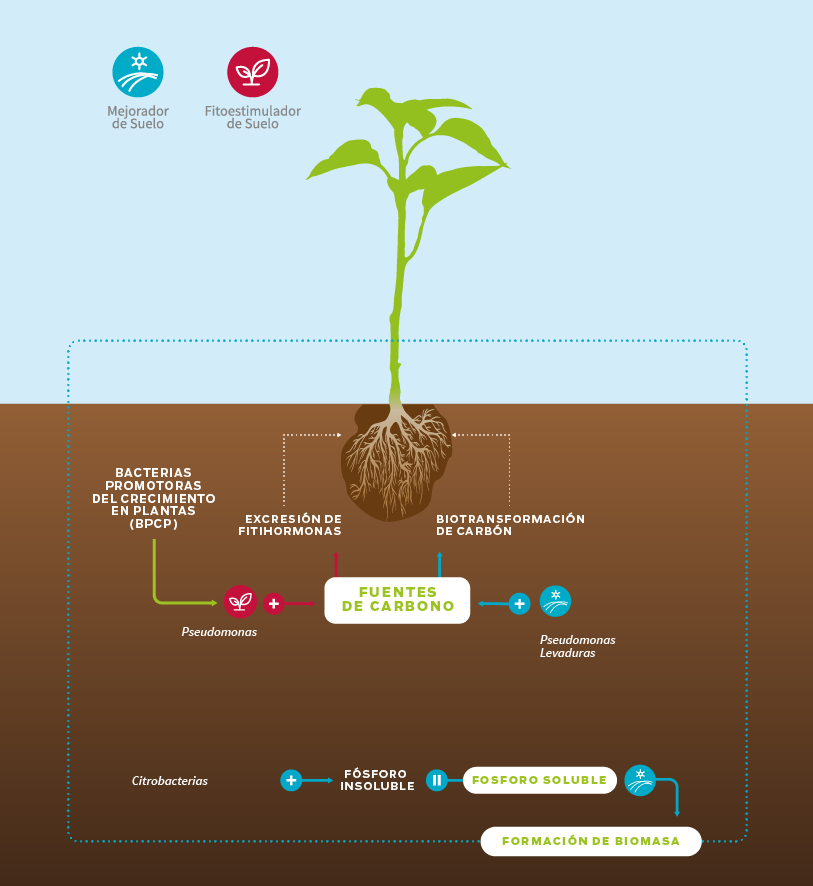
Agricultural soils that have been altered from their natural state by human modifications by increasing production, need to recover their original balance from the addition of new nutrients and microorganisms that have been lost in these practices.
LIVENTIA® has a wide portfolio of microorganisms that aim to improve the soil, bioremediate, antagonize pathogens and plant breeders; The application of these will optimize the health of the soil and the plant.
References
1. Doran JW, Sarrantonio M and Liebig MA (1996). Soil health and sustainability. Advances in Agronomy 56: 1-54.
2. Jones DL and Hinsinger P (2008). The rhizosphere: complex by design. Plant and Soil 312: 1-6.
3. Spaepen S, Vanderleyden J and Okon Y (2009). Plant Growth-Promoting Actions of Rhizobacteria. Advances in Botanical Research 51: 283-320.
4. European Commission 2002. Communication of 16 April. 2002 from the Commission to the Council, the European Parliament, the Economic and Social Committee and the Committee of the Regions: towards a thematic strategy for soil protection [COM (2002) 179 final]. Brussels, Belgium: European Commission.